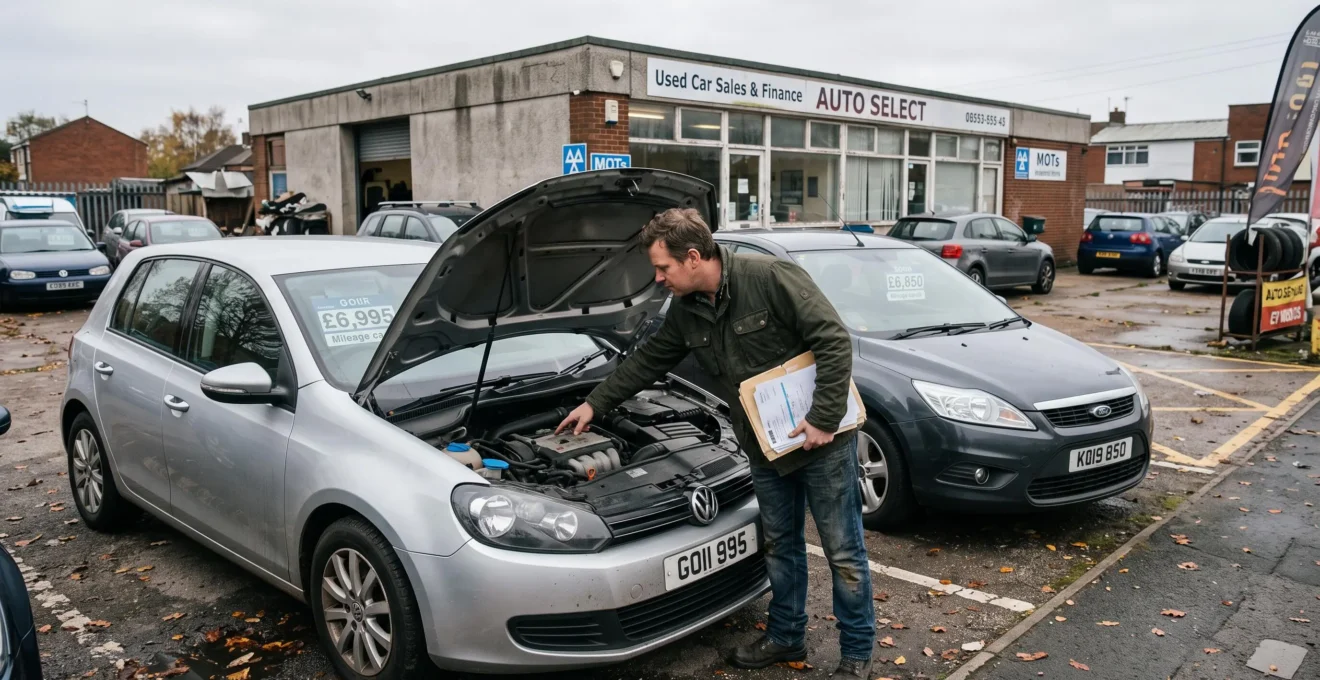
A car you can afford to buy is not necessarily a car you can afford to own. The advertised price is only the beginning: insurance, fuel, maintenance, depreciation, taxes, registration and unexpected repairs can substantially change the financial picture.
To determine how much car you can realistically afford, calculate the vehicle’s expected total cost over your intended ownership period, convert recurring expenses into a monthly budget and check whether sufficient savings remain for emergencies. This approach applies whether you are buying your first car, replacing an ageing vehicle or considering a second household car.
The difference is significant. In the United States, AAA estimated average new-vehicle ownership and operating costs at $11,577 per year in its 2025 study. That figure is not a forecast for an individual buyer or a used vehicle, but it demonstrates why purchase price alone provides an incomplete affordability assessment.
The calculations below can be adapted to different English-speaking markets using local insurance quotations, registration charges, fuel prices and repair estimates. The objective is not to find the cheapest advertised car, but to identify one whose ongoing costs remain manageable without compromising essential expenses or financial resilience.
Car affordability: the essential calculations
- Calculate total ownership costs: Include depreciation, financing, insurance, fuel, registration, maintenance and repairs rather than comparing purchase prices alone.
- Protect essential spending: Build your car budget from available cash flow after household obligations, savings commitments and an allowance for unexpected expenses.
- Compare vehicles over time: Estimate costs across your expected ownership period and obtain model-specific insurance and repair information before committing.
- Why Does an Affordable Used Car Sometimes Cost More to Own?
- How to Set a Monthly Car Budget Without Sacrificing Essential Expenses?
- Cash Purchase or Car Finance: Which Better Protects Your Budget?
- Five Hidden Car Ownership Expenses Buyers Often Underestimate
- How to Create a Repair Fund Before Buying a Used Car?
- Why Can Similar Cars Have Very Different Insurance Premiums?
- Why Can Occasional Drivers Spend More by Keeping a Spare Car?
- How to Compare Car Models Based on Your Lifestyle and Driving Needs?
Why Does an Affordable Used Car Sometimes Cost More to Own?
An affordable used car can become expensive to own when its maintenance requirements, insurance premiums, fuel consumption and repair risks outweigh its low purchase price. Two vehicles advertised for the same amount may have very different ownership costs because of their mechanical condition, parts availability, reliability and expected resale value.
The relevant measure is total cost of ownership, not the amount displayed on the windscreen. A vehicle with a low asking price may require substantial work shortly after purchase, while another with a higher price may have fewer upcoming maintenance obligations.
Several characteristics deserve particular attention. An incomplete service history makes it harder to verify whether scheduled maintenance was performed. Complex engines, transmissions or electronic systems can increase the cost of certain repairs. Older or uncommon models may also have expensive or difficult-to-source replacement parts.
Depreciation creates another distinction. A vehicle that has already lost considerable value may depreciate more slowly in absolute terms, but that does not automatically make it economical. Its future resale value and mechanical condition still matter.
Before buying, investigate known problems affecting the specific engine and model year, not merely the manufacturer’s general reputation. Request estimates for routine servicing, brakes, tyres, clutch replacement where applicable and major scheduled components such as timing belts.
Hypothetical comparison: two used cars
Car A costs $8,000 and is expected to require $4,500 in maintenance and repairs over three years. Car B costs $9,500 but is expected to require only $1,800 over the same period.
Before insurance, fuel, taxes, depreciation and other ownership expenses, the combined purchase and projected maintenance outlay is $12,500 for Car A versus $11,300 for Car B. These figures are illustrative assumptions, not market estimates. A complete comparison must also account for each car’s eventual resale value.
A slightly more expensive used car can therefore represent the better financial choice when documented maintenance, affordable parts and established reliability reduce expected future expenditure.
Once the realistic ownership costs are identified, the next question is whether they fit comfortably into your monthly household finances.
How to Set a Monthly Car Budget Without Sacrificing Essential Expenses?
Set a monthly car budget by calculating unavoidable vehicle expenses, estimating usage-related costs and reserving money for repairs before deciding what loan payment or purchase price you can afford. The resulting amount must fit within your disposable income after housing, food, utilities, existing debt payments, essential savings and other financial commitments.
Begin with costs that apply even when the vehicle is rarely driven: insurance, registration, applicable recurring taxes and scheduled maintenance. Add fuel or charging expenses based on your expected mileage, followed by parking, tolls and a repair-fund contribution.
Depreciation should also be tracked as an economic cost, although it is not a monthly bill. It represents the value you expect to lose between purchasing and selling the vehicle.
The three layers of a workable car budget are fixed obligations covered by reliable income, variable expenses covered by flexible monthly spending and unpredictable repairs supported by a dedicated reserve.
For a financed vehicle, the cash-flow calculation is:
Monthly vehicle cash requirement = loan payment + insurance + monthly share of taxes and registration + fuel or charging + routine maintenance allowance + repair-fund contribution + other recurring charges.
Keep depreciation separate from this cash-flow total when using loan payments, because loan principal repayment and depreciation are different measures. For a full economic ownership-cost calculation, account for depreciation and financing interest rather than adding the entire loan principal to the vehicle’s purchase price.
The US Consumer Financial Protection Bureau recommends considering the broader costs of ownership when deciding how much to borrow, as explained in its guidance on car loan affordability.
A useful affordability stress test is straightforward: if one significant repair would force you to borrow, miss a housing payment or postpone another essential expense, the vehicle is probably beyond your current financial comfort zone.
A manageable monthly budget creates the foundation for choosing between paying cash and borrowing without undermining your emergency savings.
Cash Purchase or Car Finance: Which Better Protects Your Budget?
Paying cash generally avoids borrowing costs, while financing can preserve savings for emergencies and major repairs. Neither option automatically protects your budget better. The appropriate choice depends on the total financing cost, the cash reserve remaining after purchase, the stability of your income and the vehicle’s expected maintenance needs.
A cash purchase removes monthly loan obligations and normally avoids interest. However, spending nearly all available savings on a car can leave the buyer financially exposed when an unexpected repair or household emergency occurs.
Financing spreads the purchase expenditure over time, preserving some immediate liquidity. In exchange, interest, fees and possible insurance requirements can increase the overall cost. A longer loan term may reduce the monthly payment while increasing total interest paid.
The most important comparison is therefore not simply cash versus credit. It is the financial position remaining after the transaction.
| Budget consideration | Cash purchase | Car financing |
|---|---|---|
| Monthly loan obligation | None | Required throughout the loan term |
| Interest expense | No vehicle borrowing interest | Depends on the agreement |
| Immediate savings impact | Higher cash outflow | Lower initial outflow if borrowing covers part of the price |
| Emergency liquidity | Depends on remaining savings | May be better preserved initially |
| Financial flexibility | No lender payment obligation | Subject to repayment terms and possible restrictions |
Consider a hypothetical buyer with $15,000 in savings considering a $12,000 car. Paying cash would leave $3,000 before transaction costs. Financing part of the purchase could preserve more cash, but would introduce repayment obligations. Whether either outcome is acceptable depends on the buyer’s wider emergency-fund needs and actual loan terms.
Promotional low-interest or 0% financing deserves careful comparison. A genuinely interest-free arrangement without additional costs may preserve liquidity efficiently. However, arrangement fees, mandatory products, shorter repayment periods or the loss of a cash discount can eliminate the apparent advantage.
Used-car financing requires additional caution. Depending on the lender, vehicle age and market, rates may be higher or repayment terms shorter than for new vehicles. Higher maintenance allowances must coexist with the required instalments.
Compare the total amount repayable, applicable fees and cash price under each offer. Also check whether the loan terms impose insurance or other obligations that affect ownership costs.
The preferred payment method is the one that preserves both sufficient emergency liquidity and an affordable ongoing budget. Even then, several ownership expenses remain easy to underestimate.
Five Hidden Car Ownership Expenses Buyers Often Underestimate
The five ownership expenses buyers frequently underestimate are depreciation, scheduled maintenance, administrative charges, real-world fuel consumption and everyday access costs such as parking and tolls. Some are paid immediately, others accumulate gradually, and several depend heavily on the vehicle’s age, location and driving pattern.
1. Depreciation. The difference between purchase price and eventual resale value is a real economic cost, even though no monthly invoice arrives. Its importance depends on the model, purchase price, market conditions and intended ownership duration.
$4,334 per year
Average annual depreciation estimated in AAA’s 2025 US new-vehicle study, based on five years and 75,000 miles. This is not a universal depreciation estimate for used vehicles or other countries.
For a practical estimate, subtract the vehicle’s anticipated resale value from its total acquisition cost. Compare the result across the number of years you expect to keep it, using realistic resale assumptions rather than a fixed depreciation percentage.
2. Preventive maintenance. Oil changes, filters, brakes, tyres and scheduled component replacements can create significant expenditure within the first 12–24 months. Request maintenance records, check manufacturer schedules and obtain estimates for work approaching its due date.
3. Administrative and acquisition charges. Depending on the jurisdiction, buyers may need to pay sales or purchase taxes, title-transfer charges, registration fees, inspections or emissions-related charges. These can be due immediately rather than spread over the ownership period.
4. Real-world fuel consumption. Official efficiency figures are useful for comparison but cannot perfectly predict an individual’s driving conditions. Urban congestion, motorway speeds, temperature, terrain, driving habits and vehicle condition all influence actual consumption.
For a vehicle rated in miles per US gallon, estimate annual fuel expenditure as annual miles divided by expected MPG, multiplied by the local price per US gallon. In metric markets, multiply annual kilometres by expected litres per 100 kilometres, divide by 100 and multiply by the local price per litre.
5. Parking, tolls and practical equipment. Residential parking permits, workplace parking, road charges, seasonal tyres and regionally required safety equipment can materially affect the budget. Check which expenses apply to your actual routes and local requirements rather than assuming every driver faces the same charges.
To avoid overlooking immediate expenditure, separate acquisition-day charges from ongoing annual costs and scheduled maintenance expected during the first two years.
Once predictable expenses have been identified, the remaining uncertainty is mechanical failure. A dedicated repair reserve makes that risk easier to manage.
How to Create a Repair Fund Before Buying a Used Car?
Create a used-car repair fund by estimating the cost of plausible major repairs for the exact model, setting aside an initial reserve before purchase and contributing regularly until that reserve reaches a suitable level. Keep this money separate from everyday vehicle spending and general emergency savings so an unexpected mechanical failure does not disrupt essential expenses.
The appropriate reserve depends on the vehicle’s age, mileage, mechanical complexity, maintenance history and local repair prices. A generic percentage of purchase price is less informative than the likely cost of repairs the vehicle could actually require.
Start by obtaining local workshop estimates for several relevant repairs. Depending on the vehicle, these might include clutch replacement, cooling-system work, transmission repairs, turbocharger replacement or electronic faults. Not every model has all these components or risks.
Then examine which repairs are plausible during your intended ownership period. Higher mileage and advancing age can increase exposure to wear-related problems, but costs do not rise at a predictable rate for every vehicle. Maintenance quality and model-specific weaknesses matter substantially.
The reserve should be available from the beginning of ownership, particularly if an inspection identifies upcoming work. Regular contributions can then replenish the balance and prepare for future repairs.
Hypothetical repair-fund calculation
Suppose a buyer identifies a plausible major repair costing $1,500 based on a workshop quotation. The buyer already has $900 available in a dedicated repair account and wants to reach $1,500 within 12 months.
The remaining $600 requires contributions of $50 per month. This is an illustrative savings calculation, not a recommended universal reserve. A vehicle with more expensive potential repairs may require a substantially larger starting balance.
Keep the fund for unexpected mechanical repairs and substantial maintenance obligations. Fuel, parking and ordinary daily expenses belong in the operating budget. After using the reserve, establish a replenishment schedule.
A repair reserve reduces financial vulnerability, but another major ownership expense must be confirmed before purchase: the insurance premium for the precise vehicle and driver.
Why Can Similar Cars Have Very Different Insurance Premiums?
Similar cars can attract very different insurance premiums because insurers assess more than their purchase prices or general appearance. The exact vehicle specification, repair costs, theft exposure, driver profile, location, annual mileage, intended use and selected coverage can all influence quotations. Pricing rules and permitted rating factors vary by jurisdiction and insurer.
Two versions of the same model may have different engines, performance characteristics, replacement-part prices or safety equipment. Those differences can influence an insurer’s assessment even when the vehicles have similar market values.
Driver circumstances are equally important. Driving experience, claims history, where the vehicle is kept and whether it is used for commuting or business can affect premiums where permitted by local rules.
The National Association of Insurance Commissioners explains these considerations in its overview of auto insurance pricing factors. Its guidance concerns the United States; individual states and other countries apply different regulatory requirements.
Coverage selection also changes the calculation. Third-party liability or the locally required minimum coverage may cost less than a policy including collision and comprehensive protection, but leaves the owner exposed to different financial risks. Coverage terminology and minimum requirements vary between markets.
For an older vehicle with a low market value, compare the additional premium and deductible against the potential benefit of optional physical-damage coverage. A financed vehicle may also be subject to lender-imposed insurance requirements.
Imported, modified or frequently stolen models deserve particular scrutiny. Some insurers may apply restrictions, additional conditions or higher prices, although such outcomes are not universal.
Before paying a deposit, request multiple insurance quotations using the exact trim, engine specification and vehicle identification number where available. Declare the intended mileage, parking arrangements and vehicle use accurately, and compare equivalent coverage limits and deductibles.
Once insurance is included, the financial value of keeping an additional vehicle may look very different, especially when that vehicle is driven only occasionally.
Why Can Occasional Drivers Spend More by Keeping a Spare Car?
Occasional drivers can spend more per mile by keeping a spare car because many ownership costs continue even when the vehicle barely moves. Insurance, registration, depreciation, inspections where required and time-based maintenance still apply. Low mileage spreads those expenses across fewer journeys, making occasional rentals or shared transport potentially cheaper.
Consider a hypothetical second car with annual fixed ownership costs of $2,000. At 2,000 miles per year, fixed costs alone equal $1 per mile. At 500 miles, they equal $4 per mile, before fuel, parking or additional repairs. These figures illustrate the calculation rather than typical market costs.
Long periods of inactivity can introduce additional maintenance needs. Batteries may discharge, tyres can develop temporary or persistent flat spots, fluids age and corrosion can progress. Storage conditions and maintenance practices influence the severity of these problems.
To evaluate alternatives, calculate how often the additional vehicle is genuinely needed, how long each journey lasts and whether a car must be available at short notice.
| Option | Potential advantage | Important limitation |
|---|---|---|
| Keep a spare car | Immediate availability and control | Ongoing fixed costs and maintenance |
| Occasional rental | Pay primarily when a vehicle is needed | Availability, deposits and rental conditions |
| Car-sharing | Flexible access without ownership | Coverage and availability vary by location |
| Taxi or ride-hailing | No personal vehicle maintenance | Journey prices and service availability vary |
| Carpooling | Shared journey costs | Less scheduling independence |
Estimate the annual cost of each realistic alternative using actual local prices and the number of journeys you expect. Include the value of convenience and the consequences of a vehicle being unavailable when needed.
Keeping a second car may remain justified for professional obligations, family logistics, accessibility needs or limited transport options. In such cases, investigate suitable low-mileage insurance arrangements and favour a mechanically straightforward vehicle with affordable maintenance.
The same principle applies to a primary vehicle: the most suitable choice depends on actual driving needs, not simply on price, size or appearance.
Key takeaways before choosing a car
- Compare the cost of meeting your transport needs, not just the cost of acquiring a vehicle.
- Use a consistent ownership period and realistic mileage assumptions for every shortlisted model.
- Check whether each candidate remains affordable after insurance, upcoming maintenance and a model-specific repair reserve are included.
How to Compare Car Models Based on Your Lifestyle and Driving Needs?
Compare car models by matching each vehicle to your actual mileage, road conditions, passenger and cargo requirements, expected ownership period and complete operating costs. Shortlist vehicles that meet your practical needs, then estimate their total ownership cost over the same period using model-specific insurance, fuel, depreciation, maintenance and repair assumptions.
Begin with your driving profile. A predominantly urban driver may prioritise manoeuvrability, parking convenience and efficiency in stop-start traffic. Someone covering long motorway distances may value cruising comfort, fuel economy and maintenance durability under sustained use.
Passenger capacity, child seats, accessibility, luggage space and towing requirements can also eliminate unsuitable models before financial comparisons begin.
The planned ownership period is particularly important. A car intended for two years may be judged largely on near-term maintenance, resale prospects and transaction costs. A car intended for eight years requires greater attention to long-term reliability, parts availability and expensive scheduled maintenance.
Research the precise engine and transmission combinations under consideration. Owner reports can highlight recurring issues, but individual experiences should be checked against service records, independent inspection findings and information from repair specialists. Also assess the availability of competent local workshops and replacement parts.
For consistent comparisons, use this economic-cost calculation:
Estimated total ownership cost = acquisition price − expected resale value + financing interest and fees + insurance + taxes and registration + fuel or charging + maintenance + repairs + parking and other operating expenses.
Use the same currency, mileage and ownership period for every candidate. Avoid counting the purchase price twice, and distinguish financing principal from financing costs. Divide the total by the number of ownership months to obtain an average economic cost per month; separately calculate actual monthly cash-flow obligations.
Real-world fuel consumption deserves particular care. The US Department of Energy explains the limitations of laboratory-based ratings in FuelEconomy.gov’s explanation of fuel economy estimates. Its standardised annual fuel-cost assumptions may not match your mileage, driving conditions or local fuel prices.
Before making a final decision, complete a practical comparison using the same evidence standards for each vehicle.
Five actions to complete your car affordability comparison
- Document your driving requirements: Produce a one-page profile listing annual mileage, typical journeys, passengers, cargo needs and intended ownership duration.
- Build a three-model shortlist: Record each candidate’s exact version, asking price, mileage, service history and known upcoming maintenance.
- Collect real ownership quotations: Obtain comparable insurance quotations and workshop estimates, saving the amounts and assumptions in a comparison sheet.
- Calculate total and monthly costs: Create a worksheet showing acquisition costs, estimated resale value, financing costs, operating expenses and repair reserves over the same ownership period.
- Run a financial stress test: Record the remaining emergency savings and verify whether a significant repair or temporary income disruption would threaten essential expenses.
Compare the two or three finalists using the completed worksheet. A vehicle with the lowest expected cost is not necessarily the right choice if it fails essential practical requirements or exposes the household to unacceptable financial risk.
As a final step, request written insurance quotations, verify maintenance records, arrange an appropriate pre-purchase inspection and calculate the money remaining after acquisition. Choose the vehicle only when both its practical suitability and full ownership budget withstand that review.
Should car affordability be calculated using gross or take-home income?
Take-home income is more useful for a household cash-flow budget because it represents the money available after payroll deductions. Subtract essential expenses, existing obligations and savings commitments before allocating money to car ownership. Any lender affordability assessment may use different criteria and should not replace your personal budget.
How can a buyer estimate depreciation without knowing the future resale price?
Review current market prices for older examples of the same model, engine and specification, adjusting cautiously for mileage and condition. Use several possible resale values rather than treating one estimate as certain. Market conditions can change, so depreciation forecasts should be considered planning assumptions rather than guaranteed outcomes.
Is a pre-purchase inspection worth including in the car budget?
Yes. An independent inspection is an acquisition expense that can help identify existing defects, maintenance needs and signs of previous damage before purchase. It cannot guarantee that future repairs will not occur, but its findings can improve the accuracy of repair estimates and support a decision to negotiate, proceed or reject a vehicle.
Should an emergency fund and a car repair fund be combined?
Keeping them separate makes financial planning clearer. A car repair fund covers vehicle-specific mechanical expenses, while general emergency savings protect against broader disruptions such as lost income or essential household repairs. If savings are limited, prioritise a realistic overall financial safety margin before purchasing a vehicle with substantial repair exposure.
How often should a car ownership budget be updated?
Review the budget when insurance renews, mileage changes significantly, maintenance estimates are revised or household income and expenses change. An annual review is a practical starting point, with additional checks before major repairs, refinancing or replacing the vehicle. Update assumptions using actual spending whenever possible.