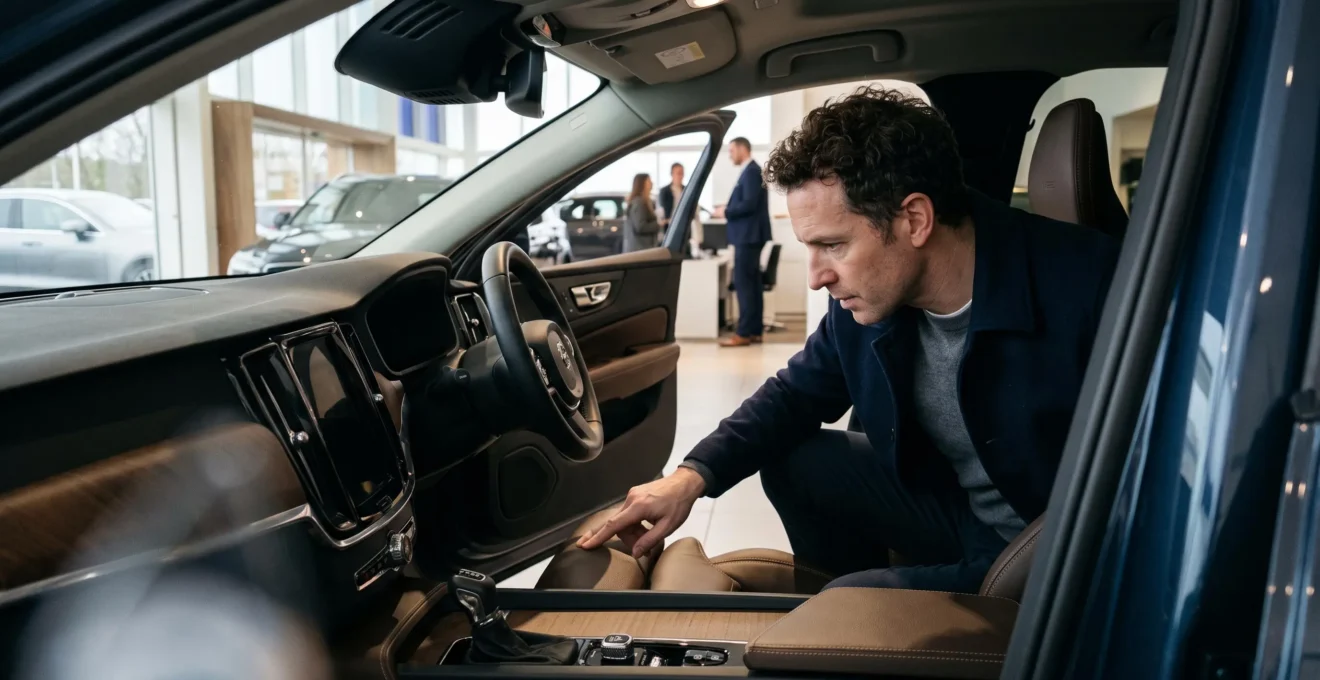
A premium car interior can feel exceptional during a showroom visit yet become disappointing after several years of ordinary use. Glossy surfaces collect visible scratches, delicate upholstery demands careful cleaning, and expensive decorative inserts do not necessarily outperform simpler alternatives.
The premium finishes most worth paying extra for are those that improve everyday comfort, tactile quality, or long-term usability without creating disproportionate maintenance demands. Genuine metal trim, well-finished wood veneer, supportive seats and appropriately selected upholstery can offer meaningful benefits. However, material specifications and construction quality matter more than an upgrade’s price or marketing description.
For buyers comparing higher trim levels, the challenge is distinguishing genuine improvements from cosmetic enhancements. That means inspecting construction, understanding how different surfaces wear, considering ownership duration and checking whether an expensive option will remain desirable when the vehicle is sold.
The following assessment focuses on observable quality, practical maintenance and realistic ownership trade-offs rather than assumptions about luxury branding.
Premium car interior finishes: the essentials
- Prioritize durable construction, supportive seating and materials that feel substantial in frequently touched areas.
- Be cautious with piano-black trim, delicate upholstery and expensive decorative packages that introduce additional maintenance.
- Inspect the exact vehicle specification and assess the upgrade against your driving habits, ownership period and likely resale value.
- Why Do Some Luxury Car Interiors Show Wear Earlier Than Expected?
- How to Check Interior Build Quality During a Showroom Inspection?
- Wood, Aluminium or Glossy Plastic: Which Interior Finish Ages Better?
- Luxury Interior Finishes That Are Easily Scratched or Damaged
- When Is a Premium Interior Package Worth the Additional Cost?
- Neoprene, Polyester or Canvas: Which Seat Cover Material Is More Durable?
- Leather or Fabric Car Seats: Which Need More Maintenance?
- Which Advanced Vehicle Technologies Are Actually Useful for Daily Driving?
Why Do Some Luxury Car Interiors Show Wear Earlier Than Expected?
Some luxury interiors show premature wear because their materials are selected partly for appearance, softness and immediate tactile appeal rather than maximum resistance to everyday contact. High-gloss coatings, delicate leather finishes and frequently touched surfaces can deteriorate visibly even when the underlying components remain functional. Actual longevity depends on material formulation, exposure, cleaning and usage patterns.
A soft dashboard coating may feel more sophisticated than hard plastic, but softness alone does not establish durability. Similarly, an expensive leather seat can be more sensitive to staining or surface abrasion than a carefully engineered coated alternative.
Four mechanisms explain much of the visible deterioration:
- UV exposure and heat: Sunlight and elevated cabin temperatures can contribute to discoloration, coating deterioration and changes in material flexibility. Performance varies with formulation and protection.
- Friction and dye transfer: Repeated contact with clothing affects seat bolsters, while denim and other dyed fabrics may transfer colour onto light upholstery.
- Skin oils and contaminants: Steering wheels, gear selectors and door pulls accumulate oils, cosmetics and residues that can affect their protective surfaces.
- Incorrect cleaning: Aggressive solvents, unsuitable detergents and abrasive wiping can damage coatings rather than preserve them.
Kia’s official interior care instructions specifically warn that high-alcohol solutions and acidic or alkaline detergents can fade or strip leather surfaces. The guidance also identifies abrasive dust, sharp objects and certain personal-care products as potential sources of damage. These are manufacturer-specific precautions, not comparative durability test results.
Usage frequency can outweigh material price. A daily-driven vehicle may develop polished steering-wheel areas, worn seat bolsters and marked console edges much sooner than a weekend car with similar upholstery.
Warranty protection also requires scrutiny. Cosmetic deterioration associated with normal wear or inappropriate maintenance may be excluded, while premature material failure caused by a manufacturing defect may qualify for coverage. The actual outcome depends on the manufacturer’s terms, applicable consumer law and the evidence supporting the claim.
Visible wear can affect resale negotiations, particularly when expensive upholstery or trim requires specialist restoration. However, there is no universal depreciation percentage attributable to a particular finish.
The practical lesson is to judge surfaces according to where and how often they will be touched, not simply how luxurious they appear when new. A physical showroom inspection is the next opportunity to identify potential weaknesses.
How to Check Interior Build Quality During a Showroom Inspection?
Interior build quality is best assessed through a systematic physical inspection of panel fit, structural rigidity, controls, upholstery and material consistency. Pressing accessible surfaces gently, checking trim alignment and operating storage compartments can reveal weaknesses that photographs conceal. Inspect the exact specification being purchased because higher showroom trims may contain different materials.
Begin with the dashboard and door panels. Apply moderate fingertip pressure to non-delicate surfaces and listen for unexpected creaks or movement. A hollow sound is not automatically evidence of poor construction: some components deliberately use lightweight structures or acoustic cavities.
Next, inspect the joins between dashboard sections, console surrounds and door inserts. Consistent gaps and secure attachments generally indicate careful assembly. However, gap width alone cannot establish long-term reliability.
Operate the glovebox, centre-console lid, cupholder covers and adjustable vents. Look for smooth movement, secure latching and consistent resistance. Close doors normally and listen for rattles, but avoid interpreting a heavy closing sound as proof of superior engineering.
Material identification requires additional care. Real metal often feels cooler than surrounding plastic under similar conditions, although temperature is not a definitive test. Leather texture, grain consistency and smell are equally imperfect indicators: modern coated leather can feel unusually uniform, while synthetic materials can convincingly imitate natural hides.
Request the manufacturer’s material specification rather than relying on sensory impressions. A strong chemical odour may justify asking about cleaning, storage or interior materials, but it does not independently prove that a surface is low-quality or unsafe.
Finally, inspect less prominent locations: seatback panels, lower door sections, console edges and the underside of accessible trim. These areas reveal whether premium materials extend beyond the most visible surfaces.
Five showroom checks to complete before ordering
- Press accessible dashboard and door surfaces gently; record any loose trim, movement or creaking in a written inspection note.
- Compare visible panel gaps on both sides of the cabin; photograph any noticeable misalignment.
- Operate every accessible compartment, vent and console lid; create a short list of sticking or rattling components.
- Examine seat bolsters, stitching and frequently touched edges; take close-up photographs of material and finishing details.
- Compare the inspected vehicle with the written specification of your chosen trim; obtain confirmation of any material differences from the dealer.
A convincing cabin should demonstrate consistent assembly and appropriate materials beyond its most photogenic surfaces. Once construction quality is established, the next question is which decorative materials will retain their appearance.
Wood, Aluminium or Glossy Plastic: Which Interior Finish Ages Better?
Brushed genuine aluminium and well-finished, low-gloss wood veneer are often sensible choices for buyers concerned about visible aging, while glossy black plastic generally demands more careful handling to maintain its appearance. No material wins universally: scratch resistance, UV stability, surface coating and repairability vary by product. Finish texture can matter as much as material identity.
Research published by SAE International identifies material composition, surface texture and colour as factors influencing scratch visibility in automotive plastics. Its study of automotive interior scratch visibility examined polypropylene and ABS specimens rather than comparing every luxury trim material.
This distinction matters because scratch visibility is not the same as scratch resistance. A textured surface may conceal minor marks even if it is not inherently harder than a glossy alternative.
The following comparison describes practical material tendencies rather than standardized laboratory rankings.
| Finish | Visible wear and UV considerations | Repair and ownership implications |
|---|---|---|
| Open-pore wood veneer | Subtle texture can disguise light marks; prolonged heat and moisture may affect certain veneers or adhesives. | Some damage can be refinished by specialists, depending on veneer thickness and coating. |
| High-gloss lacquered wood | Reflective coatings make fine marks easier to notice; impact damage can affect the lacquer. | Polishing may be possible, but repairs can be complex and expensive. |
| Brushed or anodized aluminium | Often hides light handling marks better than polished metal; anodized finishes depend on coating quality. | Easy routine cleaning, although deep scratches or damaged anodizing can be difficult to restore invisibly. |
| Glossy piano-black plastic | Dust, fingerprints and fine scratches are conspicuous under directional light. | Requires careful cleaning; polishing or replacing damaged trim depends on the component and coating. |
| Painted metallic-look plastic | Performance depends on the paint and protective layer; edge wear may expose the substrate. | Usually lighter and less costly, but may offer limited local repair options. |
Real wood should not automatically be considered more durable than engineered alternatives. Thin veneers, lacquer quality and bonding methods influence resistance to cracking, chipping or delamination. Likewise, genuine aluminium may dent or scratch, and a painted polymer can sometimes outperform a poorly finished metal insert.
Different ownership patterns favour different choices:
- Families with young children: Textured, matte or brushed finishes may make everyday marks less noticeable.
- Pet owners: Durable lower-door surfaces and easily cleaned trim are more important than decorative materials on the upper dashboard.
- Drivers in sunny climates: Prioritize proven UV-resistant coatings, window protection and appropriate cleaning rather than assuming all natural materials resist sunlight equally.
For a practical comparison, examine sample surfaces under direct and diffuse lighting. Ask whether the trim is genuine material, veneer, coated polymer or printed imitation, and whether individual pieces can be replaced.
For many daily drivers, a restrained low-gloss finish offers a reasonable balance of appearance and maintenance. Yet some luxury surfaces introduce more specific vulnerabilities that deserve separate consideration.
Luxury Interior Finishes That Are Easily Scratched or Damaged
The premium finishes most likely to demand special care include piano-black plastic, high-gloss lacquer, light-coloured leather, certain soft-touch coatings and suede-like microfiber on frequently handled surfaces. Their weaknesses differ: some show scratches, others stain, accumulate oils or develop visible changes in texture. Care requirements depend on the actual coating and manufacturer specification.
Piano-black trim is particularly revealing because its reflective surface makes fine marks conspicuous. Dry wiping with a dusty cloth can drag abrasive particles across the coating, creating visible lines under angled lighting.
High-gloss lacquered wood can display similar cosmetic marks, while chipped lacquer may expose the underlying decorative layer. The appropriate repair depends on whether the damage affects only the clear coat or reaches the substrate.
Light leather introduces another risk. Dye transfer from clothing and contamination from cosmetics are more noticeable on pale upholstery. Some marks can be professionally removed, but permanent discoloration or coating damage may require recolouring or component replacement.
Soft-touch coatings can also become discoloured, tacky or damaged under certain combinations of age, heat, contamination and incompatible cleaning products. This is a formulation-specific risk rather than an inevitable characteristic of every soft-touch dashboard.
Alcantara and similar suede-like materials present a different trade-off. Their texture can provide useful grip on sports seats or steering wheels, but repeated hand contact may leave visibly flattened or contaminated areas if maintenance is neglected.
Alcantara’s official cleaning and maintenance instructions recommend regular gentle cleaning and caution against aggressive solvents, direct steam, bleach and excessive heat. These instructions demonstrate the importance of material-specific care, but they do not establish that Alcantara wears faster than leather under equivalent conditions.
Protection strategies should address the actual failure mechanism. Compatible protective films can reduce direct contact with glossy trim, while approved upholstery treatments may help manage certain contaminants. Products marketed as ceramic coatings should not be assumed to prevent scratches without relevant performance evidence.
Steering-wheel wrapping or removable protection may preserve some surfaces, but compatibility with controls, heating and safety requirements must be checked. Poorly fitted accessories can create additional problems.
Lease customers should examine return-condition standards before choosing easily marked finishes. Owners planning to resell should also consider whether visible wear can be restored economically.
Fragility does not make a material inherently undesirable. It means the owner must value its appearance or tactile properties enough to accept the maintenance. That trade-off becomes central when assessing the price of an interior package.
When Is a Premium Interior Package Worth the Additional Cost?
A premium interior package is worth paying extra for when it provides improvements that the owner will regularly experience and that remain useful throughout the intended ownership period. Better seat support, effective ventilation, quality upholstery and securely fitted genuine trim can justify an upgrade. Decorative finishes and styling packages require stronger personal preference because their financial return is uncertain.
The first distinction is between functional value and perceived exclusivity. A seat that offers better adjustment, ventilation or comfort during a long commute provides a benefit that can be tested. A decorative badge or additional glossy trim may change appearance without improving usability.
Material descriptions need equally careful examination. Full-grain leather may offer an attractive natural texture, but it is not automatically more durable or easier to maintain than corrected-grain or coated leather. Similarly, genuine wood and metal provide material authenticity without guaranteeing superior resistance to every form of damage.
For a practical decision, separate upgrades into three categories:
- Daily-use improvements: Ergonomic seats, heating, ventilation, useful storage and durable contact surfaces.
- Material and craftsmanship improvements: Better stitching, consistent assembly, authentic trim and upholstery that suits the intended use.
- Primarily decorative upgrades: Additional colour themes, illuminated detailing, gloss inserts and exclusive styling elements.
Resale value requires model-specific evidence. Compare used listings with similar mileage, age, condition, engine and equipment, then identify whether the interior package consistently commands a higher asking price. Asking prices are not confirmed transaction prices, and differences may reflect other equipment bundled with the trim.
Hypothetical ownership comparison
Consider two buyers choosing between the same vehicle’s standard and premium interiors. One plans a three-year lease with limited annual mileage; the other intends to keep the car for ten years and drives frequently with passengers.
The lessee may prioritize monthly cost, comfort and lease-return condition. The long-term owner has greater reason to evaluate upholstery repairability, wear resistance and replacement-part availability. Neither choice guarantees a better financial outcome without actual package prices and model-specific resale evidence.
Ownership duration changes the calculation. A short-term lease may make a costly material upgrade difficult to justify financially, while long-term ownership provides more opportunities to benefit from comfort and tactile improvements. It also exposes fragile finishes to more years of wear.
Alternatives can sometimes provide better value. A mid-level trim with suitable protective accessories, professional upholstery care or approved trim protection may address specific durability concerns without purchasing an entire luxury package.
However, aftermarket modifications have limits. Poorly fitted seat covers can interfere with side airbags, occupancy sensors, heating or ventilation. Chemical treatments may also be incompatible with factory coatings or warranty conditions. Integrated seat functions and structural improvements generally cannot be replicated safely with simple accessories.
The most defensible purchase is the least expensive specification that delivers the materials, comfort and construction quality genuinely needed. Seat protection and maintenance can then be considered separately rather than treated as reasons to buy a higher trim.
Neoprene, Polyester or Canvas: Which Seat Cover Material Is More Durable?
Canvas is often suitable for demanding use involving abrasion and equipment, neoprene is useful where spills and moisture exposure are common, and polyester offers a practical balance of cost, flexibility and everyday wear resistance. None is universally the most durable. Construction, fit, coating quality, sunlight exposure and compatibility with the original seat are decisive factors.
Seat covers are particularly relevant when a buyer wants to preserve expensive factory upholstery. However, the protective material itself can introduce problems if it traps moisture, moves against the seat or prevents integrated features from functioning correctly.
The comparison below focuses on common failure modes rather than unsupported claims about service life.
| Material | Main advantages | Potential limitations | Suitable use |
|---|---|---|---|
| Neoprene | Flexible and often resistant to splashes, depending on construction and seams. | Can retain moisture beneath the cover; some formulations are sensitive to prolonged heat and UV exposure. | Gym trips, family commuting and occasional wet clothing. |
| Polyester | Lightweight, economical and available in abrasion-resistant, colourfast constructions. | Quality varies widely; thin fabrics and weak seams can wear prematurely. | General commuting and budget-conscious protection. |
| Canvas | Often robust against tearing and rough handling when tightly woven and well constructed. | Can feel stiff; poor fit or trapped grit may abrade the original upholstery. | Work vehicles, equipment transport and some pet-related use. |
Fit quality can matter more than material choice. A custom-fitted cover that remains securely positioned is generally preferable to a loose universal cover that repeatedly rubs against bolsters and stitching.
For vehicles with premium leather or high-grade fabric, inspect the original upholstery regularly beneath any cover. Moisture, dirt and friction can accumulate unnoticed, potentially defeating the purpose of protecting the seats.
Compatibility is essential. Use only covers specifically approved for the vehicle’s seat configuration, particularly where seat-mounted airbags, occupancy detection, ventilation or heating are involved. Never obstruct an airbag deployment area.
Owners who selected premium seats for their appearance and tactile qualities should consider whether covering them removes much of the value of the original upgrade. Targeted cleaning and protection may be a better solution.
A durable cover should preserve the factory seat without compromising safety or comfort. For many premium vehicles, understanding the maintenance requirements of the original upholstery is more useful than covering it permanently.
Leather or Fabric Car Seats: Which Need More Maintenance?
Leather seats often require more specialized cleaning and surface care than modern automotive fabric, although the difference depends heavily on leather type and usage. Coated leather can be relatively easy to maintain, while more absorbent natural finishes demand greater attention. Fabric generally benefits from vacuuming and prompt stain treatment but may retain difficult spills.
The common assumption that all leather requires frequent conditioning is misleading. Many automotive seats use pigmented or coated leather with a protective finish. Their care requirements can differ substantially from semi-aniline or other minimally protected leather surfaces.
Conditioners intended to penetrate exposed leather may provide little benefit on an intact impermeable coating. Using unnecessary or incompatible products can leave residues or affect the finish. Follow the vehicle manufacturer’s guidance rather than applying a universal conditioning schedule.
Leather maintenance typically involves removing abrasive dust, cleaning with compatible products and addressing dye transfer before it becomes persistent. More absorbent leather may require additional approved protective care, especially where sunlight and low humidity contribute to drying.
Fabric upholstery usually needs regular vacuuming and quick treatment of spills. Depending on the textile and backing, appropriate extraction cleaning can help remove embedded contamination. Excessive wetting, however, may affect foam or adhesive layers and should be avoided.
The differences become clearer when considering ownership costs.
| Criterion | Leather upholstery | Fabric upholstery |
|---|---|---|
| Routine care | Vacuuming and material-compatible surface cleaning. | Vacuuming and periodic spot cleaning. |
| Common cosmetic risks | Dye transfer, coating wear, scratches and finish discoloration. | Absorbed spills, embedded dirt, staining and textile abrasion. |
| Specialist restoration | Some finishes can be recoloured or repaired. | Some stains can be extracted; damaged panels may need replacement. |
| Care complexity | Highly dependent on leather type and protective coating. | Dependent on weave, fibre, backing and stain resistance. |
Leather can offer useful specialist repair options, including local recolouring or panel replacement. Fabric is not necessarily unrepairable, but permanent staining or damage to its weave may make replacement more practical.
Neither material has a universally lower lifetime ownership cost. Labour, repair availability, climate, upholstery specification and how the car is used all influence the result.
Buyers seeking minimal upkeep should prioritize surfaces with clearly documented care requirements rather than assuming leather is always luxurious or fabric is always economical. The same daily-use approach also helps evaluate technology upgrades inside the cabin.
Key takeaways before choosing your specification
- Judge every interior upgrade by how frequently it improves the driving experience, not by how prominently it appears in a brochure.
- Consider repairability and ongoing maintenance alongside the initial purchase price.
- Apply the same scrutiny to digital controls and cabin technology as to leather, wood and decorative trim.
Which Advanced Vehicle Technologies Are Actually Useful for Daily Driving?
The most useful advanced vehicle technologies are those that improve safety, comfort or convenience during journeys the owner makes regularly. Features such as adaptive cruise control, effective smartphone integration, heated seats and reversing cameras can offer practical benefits. More elaborate interfaces, gesture controls and automated functions deserve individual testing because usefulness varies with driving conditions and personal preferences.
Technology packages increasingly form part of premium interior specifications. Large displays, touch-sensitive controls, ambient lighting and digital interfaces influence both the cabin’s appearance and its long-term ownership experience.
Unlike conventional decorative trim, electronic features introduce additional dependencies: sensors, software, subscriptions, replacement components and manufacturer support.
A useful distinction is between frequently used functions and occasional conveniences.
- Frequent-use features: Heated seats, heated steering wheels, clear reversing cameras and intuitive smartphone integration may deliver benefits on many journeys, depending on climate and driving habits.
- Condition-dependent features: Adaptive cruise control can reduce workload on suitable roads, while ventilated seats may be especially valuable in hot climates. Driver-assistance systems still require appropriate supervision.
- Occasional-use features: Gesture controls, elaborate ambient-lighting programs and certain automated parking functions may provide limited additional value if rarely activated.
Touchscreens and capacitive panels also change the durability equation. Their glossy surfaces can accumulate fingerprints and visible scratches, while replacing physical buttons may make some frequently used functions less convenient to operate.
Repairability deserves attention. An integrated screen or control module may be costly to replace, but actual repair costs depend on the vehicle and component. Software support and subscription conditions can also change the value of a feature over time.
Before purchasing, test the relevant systems during a representative drive. Check whether climate settings are accessible without navigating multiple menus, whether smartphone integration works reliably and whether driver-assistance functions behave predictably in suitable conditions.
Ask the dealer which features remain available without an active subscription, whether updates are included, and what warranty or repair arrangements apply to integrated displays and controls. Obtain written confirmation where a feature materially affects the purchase decision.
Before signing an order, compare the exact vehicle specification against a short list of features you have personally tested and expect to use. Prioritizing dependable, frequently used equipment over impressive demonstrations is a practical way to make premium spending more rewarding.
Is genuine leather always better than synthetic leather in a premium car?
No. Genuine leather can offer distinctive texture and repair possibilities, but quality synthetic upholstery may be easier to clean and more resistant to certain forms of staining. Durability depends on the specific material, surface treatment, construction and usage. Compare samples and maintenance instructions rather than relying on the material name alone.
Does a higher trim level guarantee better interior build quality?
No. Higher trims may add decorative materials, upholstery choices or equipment without changing the underlying dashboard structure, panel attachments or assembly processes. Examine the exact trim specification and compare its construction with lower versions of the same model.
Can scratches in piano-black car trim be repaired?
Some superficial marks can be reduced through professional polishing or compatible refinishing methods, depending on the coating. Deeper scratches may require component replacement. Aggressive polishing can damage thin protective layers, so the manufacturer’s repair guidance should be checked first.
Do premium interior options increase a car’s resale value?
Some options may improve buyer appeal or resale prices, but there is no reliable universal return on their original cost. Compare equivalent used vehicles with and without the package, accounting for condition, mileage, age and other equipment. A higher asking price does not necessarily mean the full upgrade cost will be recovered.
Should a premium car interior receive protective treatment immediately after purchase?
Not automatically. Some factory surfaces already have protective coatings, and additional products may be unnecessary or incompatible. Identify the upholstery and trim materials first, consult their maintenance instructions and choose targeted protection only where it addresses a realistic risk without affecting appearance, functionality or warranty conditions.